Mexico: Union gerontocracy and leadership renewal — biological as a rule, political by exception… but never democratic?
Part 2: The hard data: advanced age and lifelong tenure
The Secretaries General of the main labor federations remain in office for an average of 14.75 years, which reflects low turnover in leadership positions and the prolonged permanence of the same profiles in power; in fact, it is not unusual for them to be de facto lifelong leaders, even though on paper and in formal discourse this is framed in terms of re-election and of “the rank and file not letting them step aside”…
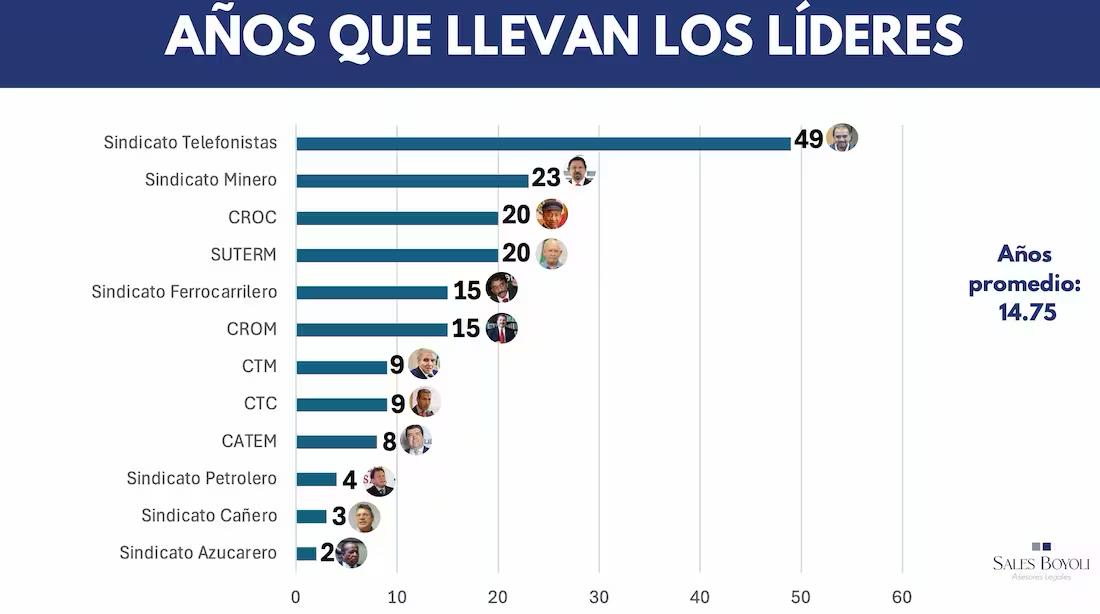
This situation raises serious questions about the mechanisms of internal democracy and the real possibility of alternation within unions. It is also telling that those leaders who have been in office for only a short time tend to occupy that “chair” because their predecessor died in office — who, like the Pope in the Catholic Church, cease to be Secretary of the Union only upon death; except that in the Church, as in monarchies, there is no parallel discourse claiming that such positions are regularly renewed…
The aging of leadership is another striking feature. The average age of current union leaders is 74.2 years, which confirms that a large part of Mexican trade unionism is headed by individuals who have remained in positions of command for decades.
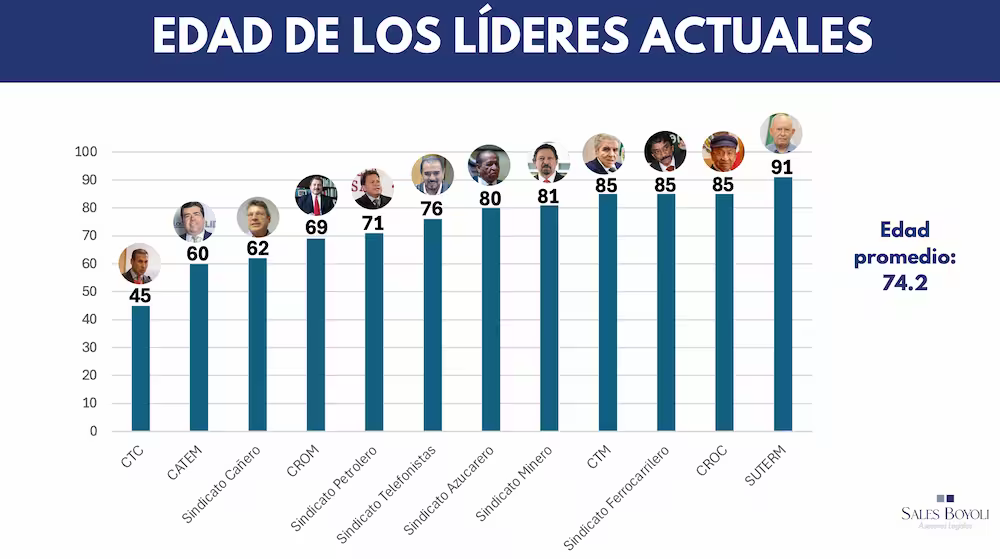
While experience is certainly a relevant factor, this profile may nonetheless hinder unions’ ability to adapt to a labor environment shaped by new generations, technological change, and transformations in forms of employment.
The relevance of this phenomenon is amplified when one considers the scale of these organizations. On average, each union brings together more than 1.18 million affiliated workers, which means that the decisions of a very small number of leaders have a direct impact on working conditions, representation, and the defense of rights across multiple sectors of the labor market.
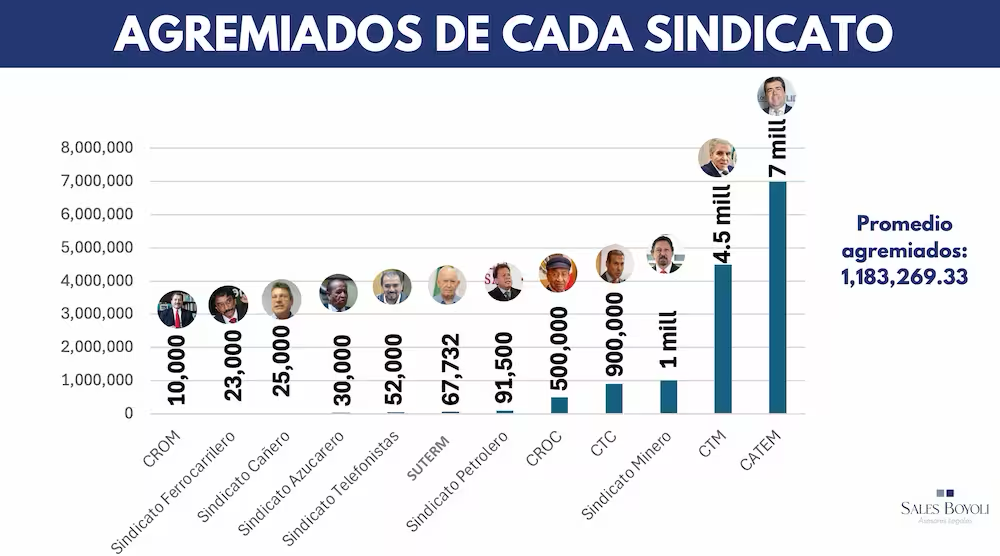
This scenario points toward a form of union gerontocracy, in which advanced age and prolonged tenure in office combine to consolidate power structures that are rarely renewed. The challenge for Mexican trade unionism will be to open spaces for generational renewal that respond to the new realities of the world of work.