Mexico: The Rise of Union Leadership and the Pattern of Perpetuation in Office
Part 1. Structural Pattern: “Discursive Renewal, Real Continuity”
In Mexican unionism throughout the 20th century and much of the 21st, a recognizable sequence is repeated:
A legitimacy crisis of the long-standing leader (due to age, wear, scandals, or political rupture).
The rise of an internal successor – not an external one – who presents himself as:
- Guarantor of “unity”,
- Corrector of past excesses,
- Defender of union institutionalism.
Consolidation of the new leadership through:
- Ad hoc bylaw reforms,
- Successive re-elections,
- Control over membership rolls and union congresses,
- Perpetuation in office until death, physical incapacity, or external intervention by the State.
The problem is not merely personal, but institutional: unions are designed to concentrate power, not to renew it.
Paradigmatic Cases
Fidel Velázquez Sánchez (CTM)
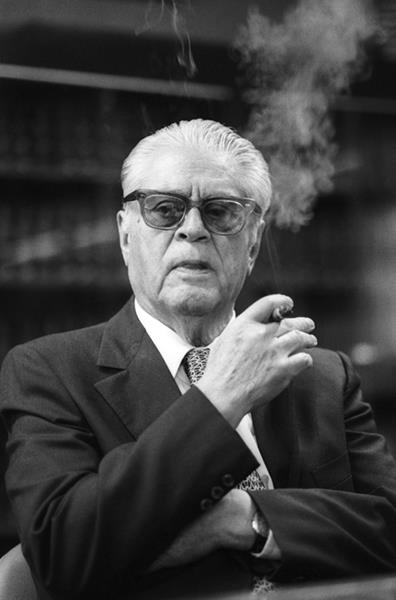
The archetype
- How did he rise? He displaced previous leaders in the 1940s–50s under the banner of “worker unity” and institutional discipline.
- Initial narrative: to prevent fragmented local strongmen and to strengthen the central labor federation.
- Outcome: Secretary General of the CTM from 1950 until his death in 1997 (47 years).
- Legacy: He normalized the idea that union leadership is neither inherited nor relinquished: he institutionalized “lifelong leadership” as synonymous with stability.
- Paradox: He came to power criticizing personalism… and turned it into a system.
Carlos Romero Deschamps (Oil Industry)
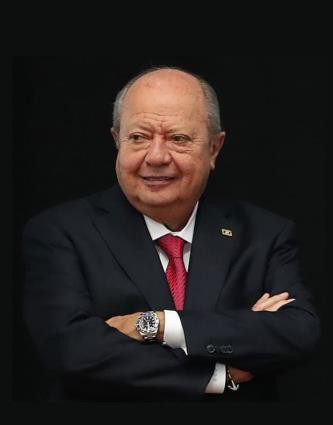
Heir who promised a break with the past
- How did he rise? He replaced Joaquín Hernández Galicia “La Quina” after his political downfall in 1989.
- Initial narrative: a “new era,” modernization of the oil workers’ union, closing the cycle of excesses.
- Outcome: He remained in office for 26 years (1993–2019).
- End: Forced resignation, not democratic succession.
- Key trait: He turned the union into a patrimonial and family-based apparatus, even surpassing his predecessor.
- Historical irony: the leader who came after the symbol of caciquismo became one of its longest-lasting cases.
Víctor Flores Morales (Railroad workers)
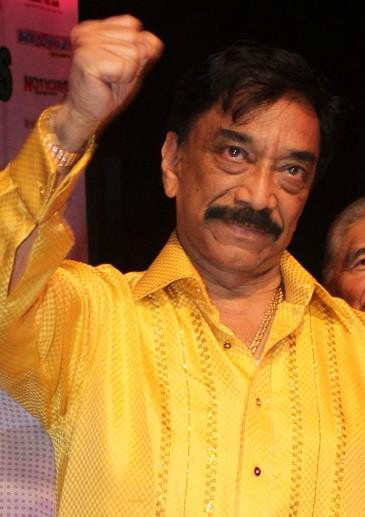
Silent continuity
- How did he rise? Internal displacement following the wear and loss of legitimacy of previous leaderships.
- Initial narrative: job stability in a declining sector.
- Outcome: In office for almost 20 years.
- Particularity: He did not need major discursive breaks — inertia did the work.
- A typical case of perpetuation through the absence of counterweights, not through charisma.
Francisco Hernández Juárez (Telephone workers)
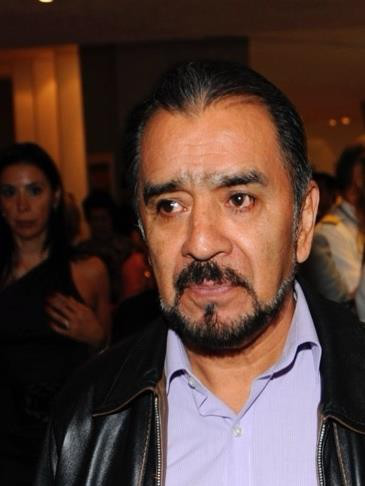
The reformer who became indispensable.
- How did he rise? He displaced traditional leadership in the 1970s with a progressive and democratic narrative.
- Initial narrative: union democracy, autonomy from the State, modern trade unionism.
- Outcome: Secretary General since 1976 (almost 50 years).
- Core contradiction: a historic defender of union democracy… without real alternation.
- Even the “good” leader can become irreplaceable.
Why does this phenomenon occur?
Structural factors
- Flexible or easily manipulated bylaws.
- Controlled congresses and closed membership rolls.
- Lack of financial and political accountability.
- A union culture that confuses stability with permanence.
Political factors
- For decades, the State preferred predictable leaders over uncertain democratic processes.
- Longevity was rewarded with access, resources, and protection.
Recent change: real break or cosmetic adjustment? The 2019–2023 labor reforms introduced:
- Personal, free, direct, and secret voting,
- Contract legitimation,
- Greater formal oversight.
But:
- They did not eliminate the power of historical leadership.
- They did not impose effective limits on re-election.
- They did not change the internal culture of union power.
The system changed the rules, not necessarily the players.
Conclusion
Mexican trade unionism has repeatedly produced the same figure:
The leader who comes in denouncing perpetuation… and ends up justifying it in the name of stability, unity, or the historical cause.
As long as there is no:
- Mandatory alternation,
- Real term limits,
- And effective internal accountability,
Leadership change will remain biological or political — not democratic.